
1. Relay 89 Not Working
The elevator safety circuit is open, and the external wiring is normal, but it still cannot start (relay 89 does not activate, indicator light 89 is off). First, reconfirm the normality of the safety circuit 29. We cannot assume the safety circuit is normal just because indicator light 29 is on. The SPVF safety circuit is directly input to board P1 via a switch and current limiting at terminal 79. Therefore, sometimes a lower voltage can be input to board P1, creating a false impression that the safety circuit is normal, but the lower voltage cannot actually activate relay 89. So, if the short circuit in the safety circuit is not severe, it may not blow the fuse, but will cause this phenomenon. We can measure the resistance to ground of the safety circuit and the voltage at various points in the safety circuit to determine the problem. If the safety circuit is normal, then check if pin W1C-P09 of board P1 outputs a low voltage. Since this output point on board P1 is easily damaged, simply checking the output transistor and wiring of board P1 can usually find the fault.
2. Elevator Call Failure
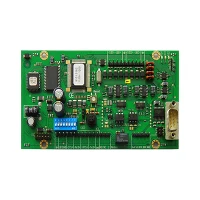
The elevator can be operated for maintenance, automatically leveling and returning to the base station. All external circuits are normal, but the serial LED (STM) on the P1 board is not flashing, indicating a malfunction in the serial system. The SPVF serial system has two branches: one from the machine room to the external call button, and the other from the machine room to the internal command and floor indicator. Serial system errors typically manifest in several ways: a single floor error means only that floor cannot be called; two floors error means calls cannot be made between those two floors (because the system can transmit bidirectionally); some errors cause the call button light to remain on, and the elevator automatically responds to that floor; errors inside the car manifest as the command light lighting up for every floor, and the elevator stopping at each floor; or the floor indicator not displaying, and the floor not changing. These are all signs of a serial system error. When these problems occur, we first need to identify which branch is faulty based on its structure, and then find out which component is faulty, which makes repair easier. This serial system mainly consists of two interface chips, UPA67C, on the P1 board, and some current limiting and voltage limiting circuits. Each hall door box contains an integrated chip, m5690/m5226. There are also m5690 and m5226 chips on the call board and display board inside the car. These are the main chips of this serial system.