
What Is an MRL Elevator? Mechanics, Layouts, and Local Field Specifications
An MRL (Machine-Room-Less) elevator is a gearless traction lift system that houses its drive motor, governor, and main controller directly inside the elevator hoistway shaft-eliminating the need for a traditional penthouse machine room above the roof deck.
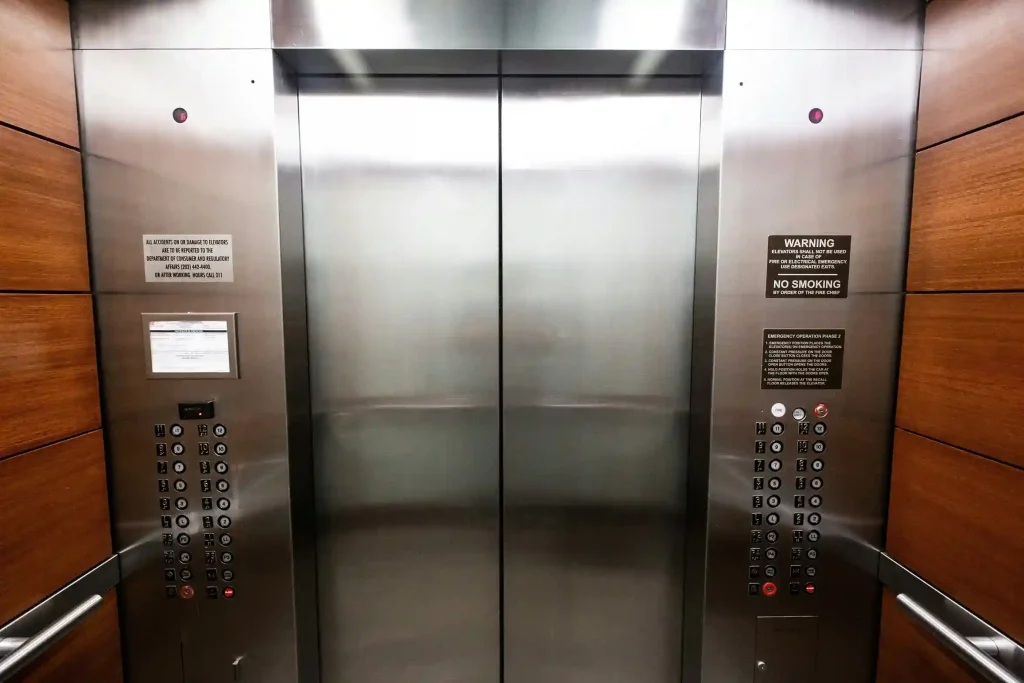
What Is an MRL (Machine-Room-Less) Elevator?
An MRL (Machine-Room-Less) elevator is an electric traction lift powered by a compact, gearless Permanent Magnet Synchronous Motor (PMSM) mounted directly to the top wall or guide rails inside the hoistway shaft.
Instead of running long steel cables up through concrete slab penetrations into a dedicated motor room, an MRL system utilizes compact gearless PMSM motors or coated steel belts mounted inside the shaft top. The main maintenance control panel mounts flush into the door frame at the top floor landing, giving service technicians direct access to drive diagnostic ports without entering the hoistway or climbing onto the roof deck.
How Does an MRL Elevator Work Inside the Shaft?
MRL traction systems rely on gearless motor efficiency, counterweight balance, and precise electronic control to deliver smooth vertical travel.
1.1. PMSM Motor Activation:Convert AC power into high-torque rotation.
When a passenger registers a hall call or floor destination, the Variable Voltage Variable Frequency (VVVF) drive feeds regulated AC power into the gearless Permanent Magnet Synchronous Motor (PMSM) mounted inside the shaft head.
2.2. Traction Sheave Rotation:Drive coated steel belts or wire ropes.
The PMSM drive directly turns a small-diameter traction sheave. Coated steel belts or high-tensile steel wire ropes looped over the sheave transfer force between the cabin sling frame and the counterweight frame.
3.3. Counterweight Displacement:Balance cabin weight to optimize power.
The counterweight frame, weighted to match the car's deadweight plus 40% to 50% of its rated passenger capacity, moves in the opposite direction. This balance reduces the energy needed to move the car.
4.4. VVVF Inverter Speed Regulation:Regulate acceleration and deceleration profile.
The VVVF controller monitors encoder signals from the motor shaft 100 times per second, adjusting current frequency to manage acceleration, contract travel speed, and leveling accuracy within 2 to 3 millimeters at each floor landing.
5.5. Electromechanical Holding Brake Engagement:Engage disc brakes and drop cabin locks.
Once the car levels at the destination floor, the controller cuts current to the drive and drops dual independent electromagnetic disc brakes directly onto the motor rotor shaft to hold the car securely.
Maximizing Rooftop Amenities and Solar Footprints
Modern luxury apartments and commercial towers across Madhapur and Financial District utilize flat roof spaces for solar photovoltaic panels, swimming pools, and rooftop gardens. An MRL shaft terminates flush near the roof slab level, keeping the terrace unobstructed.
MRL vs Geared Traction vs Hydraulic Elevators
Choosing the correct vertical transportation technology requires matching drive mechanics to your building's travel height, speed demands, and traffic volume:
MRL Gearless Traction
Best suited for: 3 to 25-stop residential apartments, commercial offices, and high-use villas.
Key Advantages: Excellent energy efficiency, fast contract speeds up to 2.5 m/s, whisper-quiet cab travel, and minimal overhead requirement.
Traditional Geared Traction
Best suited for: Older commercial retrofits with pre-existing rooftop machine rooms.
Key Advantages: Familiar mechanical design for legacy maintenance crews, lower initial equipment purchase cost.
Drawbacks: Requires regular gearbox oil changes, higher power consumption, noisy operation, and large structural footprints.
Hydraulic Home Systems
Best suited for: 2 to 4-stop low-rise residential villas where overhead space is restricted.
Key Advantages: Lowest overhead clearance requirements, shallow pit needs (150mm–300mm).
Drawbacks: Slow travel speeds (0.3–0.5 m/s), high power consumption during upward travel, potential fluid leak risks in warm weather.
What Regulatory Codes Govern MRL Elevators in Telangana?
MRL elevator installations must adhere to national engineering standards and local statutory frameworks to ensure operational safety and passenger protection:
Bureau of Indian Standards (IS 15785): Indian Standard IS 15785 lays out specific construction, machine clearance, emergency retrieval access, and structural loading requirements for machine-room-less electric lifts. It covers guide rail strength calculations and shaft ventilation parameters.
National Building Code (NBC 2016 Part 8): Governs automatic door closing timing, fire-rated door assemblies (2-hour fire rating for shafts), full-height infrared light curtains, emergency alarm systems, and braille COP/LOP button layouts.
Telangana Lifts and Escalators Act: Requires building owners to obtain a formal Lift Installation Permitting Certificate before beginning shaft assembly. After installation, the state Chief Electrical Inspectorate conducts a safety load-drop test before issuing an operating license.
Primary factors affecting final project quotes include:
Shaft Construction Material: Standard brick or concrete shafts reduce structural fabrication expenses compared to standalone structural steel frames.
Contract Speed Requirements: Standard 1.0 m/s drives cost less than high-speed 1.75 m/s or 2.0 m/s VVVF controllers specified for taller commercial towers.
Regenerative Drive Modules: Adding a regenerative power system feeds excess energy back into the building's electrical grid during braking, cutting utility costs.
Commercial Retrofit in Hitech City
A 6-story commercial building in Hitech City needed to replace an old, power-hungry geared lift that suffered frequent thermal shutdowns during peak summer hours. The existing shaft layout lacked the headroom required for a standard high-speed traction machine.
We designed a custom 10-passenger (680 kg) MRL replacement system with a gearless PMSM motor mounted on reinforced guide rail brackets. The new installation fit entirely within the existing shaft, reduced electricity consumption by 38%, and eliminated thermal tripping issues.
Luxury Villa Installation in Jubilee Hills
A homeowner in Jubilee Hills constructing a 4-story luxury villa wanted a panoramic elevator that didn't disrupt the building's architectural roof line.
We installed a 4-passenger (304 kg) MRL lift featuring an anodized aluminum and toughened glass shaft enclosure. The compact motor sat inside the top of the glass shaft, running on single-phase VFD power with a 3,600mm overhead clearance.
Frequently Asked Questions
What does MRL stand for in the elevator industry?
MRL stands for Machine-Room-Less. It refers to an electric traction elevator that houses its drive motor, traction sheave, and controller directly inside the elevator shaft rather than in a separate machine room.
How does an MRL elevator save building energy?
MRL systems utilize gearless Permanent Magnet Synchronous Motors (PMSM) paired with Variable Voltage Variable Frequency (VVVF) drives. This combination reduces electrical friction losses and uses up to 40% less power than traditional geared motors.
Can technicians access MRL controls safely during maintenance?
Yes. Technicians access the main maintenance control panel via a shallow, lockable panel mounted flush into the wall beside the top floor landing doors, allowing safe operation without entering the hoistway.
What is the minimum overhead clearance required for an MRL elevator?
Standard residential and commercial MRL elevators typically require an overhead clearance (the distance from the top landing floor level to the shaft ceiling) between 3,600 mm and 3,800 mm.
Are MRL elevators quieter than traditional geared elevators?
Yes. Because PMSM gearless motors have no meshing gear teeth or oil pumps, they operate smoothly and produce minimal noise (typically under 50 dB inside the cabin).
How long do MRL elevator motors last under regular maintenance?
A well-maintained PMSM gearless MRL motor can operate reliably for 20 to 25 years, as it has fewer wearing mechanical parts than legacy geared drive assemblies.
What safety standard governs MRL elevator design in India?
MRL elevators in India are governed by Bureau of Indian Standards code IS 15785, alongside general elevator safety requirements outlined in IS 14665 and National Building Code guidelines.
Planning Your Vertical Transportation Infrastructure
Selecting the right MRL elevator system requires evaluating your building's structural footprint, daily traffic patterns, power availability, and safety requirements. Replacing bulky rooftop machine rooms with compact, gearless MRL technology lowers construction costs while improving overall transit efficiency.