
How Do Lifts Work? A Beginner's Guide to Elevator Mechanics
Ever wondered what keeps a lift moving safely as you ride to the 10th floor - or what stops it from falling? This guide breaks down the inner workings of lifts, so you can press that call button with confidence.
1. Two Main Types of Lifts
Lifts come in many designs, but most fall into two broad categories: hydraulic lifts and traction lifts.
2. Hydraulic Lifts: The Power of Push
How it works: A pump pushes oil into a cylinder, driving a piston upward to lift the car. To descend, a valve opens and the oil flows back into the reservoir under the car's own weight.
| Feature | Detail |
|---|---|
| Energy use | High |
| Best for | Low-rise buildings (2–7 floors) |
| Speed | Slow - around 1 m/s |
3. Traction Lifts: The Modern Standard
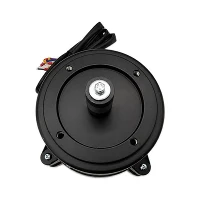
How it works: The car and a counterweight are suspended by ropes or belts that run over a sheave (pulley). When the machine moves, car and counterweight travel in opposite directions - like a see-saw. As the car rises, the counterweight falls, cutting the energy needed to move the lift.
Core components: ropes/belts · sheave · counterweight · motor · car
Geared vs. Gearless
| Type | How it works | Typical buildings | Speed |
|---|---|---|---|
| Geared | A gearbox turns the sheave | 4–30 storeys | Low to mid |
| Gearless | No external sheave; more compact | Often no machine room | High |
Real-world example: Otis installed Gen2® lifts at 22 Bishopsgate - London's highest viewing gallery as of March 2023. These gearless lifts travel at 6 m/s, the fastest in London.

4. Machine Rooms: An Optional Space Saver
Gearless machines can often eliminate the machine room entirely - these are known as MRL (Machine Room Less) lifts.
When a machine room is required, it's usually located directly above the hoistway. It houses the sheave, motor, controller, governor, brake and reduction gear, and is accessible only to expert engineers.
5. The Hoistway and the Pit
Hoistway - the shaft where the lift travels up and down.
Pit - the space below the hoistway, down to the sill of the lowest landing.
What's in the pit:
Buffers for the car and counterweight - they stop either from dropping past its normal limit
Buffer types: polyurethane for slower lifts; hydraulic buffers for lifts at 1.6 m/s and above (to absorb kinetic energy)
An engineer's access ladder, plus the governor rope and tension device
6. Essential Lift Components
Governor: The Safety Device
The overspeed governor is a mandatory safety device on traction lifts. Its rope moves with the car; if the lift exceeds a set speed, a locking mechanism engages gear teeth inside the wheel, stopping the rope and triggering the safety gear to grip the guide rails.
Lift Doors: Double Protection
Every lift has two sets of doors - one on each floor (landing doors) and one on the car. The lift won't move until all doors are closed. The car door is powered by a mechanism on top of it; the landing doors have no motor of their own, so a cam on the car door unlocks and opens the landing door at the right floor.
Control System: The Brain of the Lift
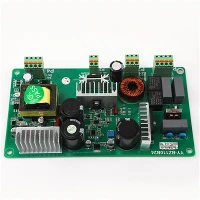
Made up of the controller and the drive, it handles three jobs: taking passengers to the right floor, keeping the ride smooth, and regulating speed. It's usually found near the top landing, in the hoistway, or in the machine room.
Cab (Car): The Passenger Space
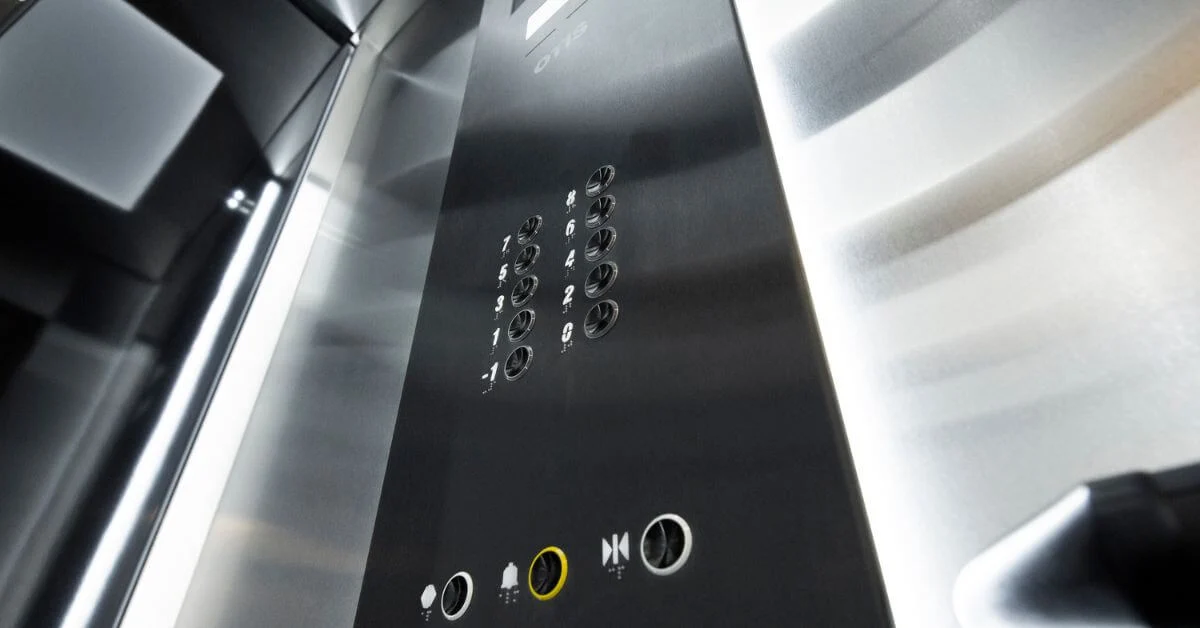
The part you interact with most. It holds the control panel (buttons) and rides on two guide rails fixed to the hoistway by brackets. Modern cars have become more refined and stylish - some even include screens to entertain and inform passengers mid-journey.
Conclusion
Lifts are quiet engineering marvels. Now that you know the basics, the next ride up won't feel quite so mysterious.