
What Is a Passenger Elevator?
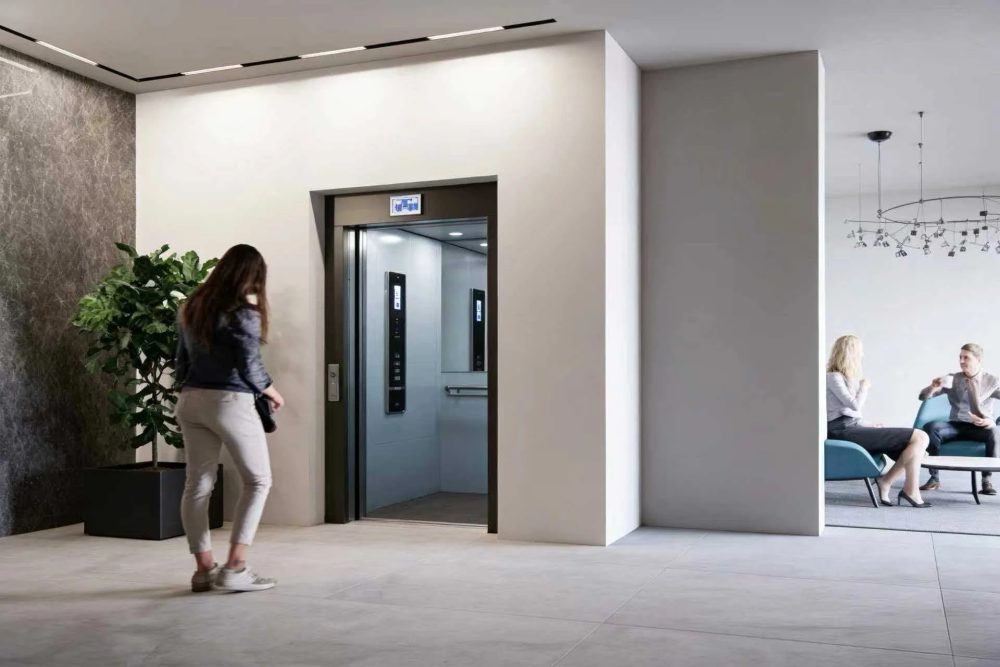
A passenger elevator is exactly what it sounds like: an elevator designed primarily to transport people. You've ridden hundreds of them-in office towers, hotels, apartment buildings, and shopping malls.
Passenger elevators are built for comfort, speed, and aesthetics. They typically feature:
Smooth, quiet operation
Finished interiors with materials like stainless steel, mirrors, or wood veneer
Automatic horizontal sliding doors
Faster travel speeds, often between 1.0 and 2.5 meters per second
Lower weight capacities, usually ranging from 630 kg to 1,600 kg
These elevators are positioned in highly visible areas-lobbies, main corridors, or central cores-because they're meant to be used by the public. They're designed to make a good impression, not just move people efficiently.
But here's the limitation: passenger elevators aren't built to handle heavy cargo. Their interiors are easily damaged by moving equipment, and their weight capacities are insufficient for industrial loads. Try loading a pallet of supplies into a polished passenger cab, and you'll quickly see why the freight elevator vs passenger elevator distinction matters.
What Is a Freight Elevator?
A freight elevator, on the other hand, is purpose-built for moving goods, equipment, and materials. You'll find them in warehouses, loading docks, automotive dealerships, hospital service corridors, and hotel back-of-house areas.
Freight elevators prioritize durability over decoration. Their defining characteristics include:
Higher load capacities, often ranging from 1,000 kg up to 5,000 kg or more
Slower travel speeds, typically between 0.5 and 1.0 meters per second
Reinforced interiors: steel wall panels, heavy-duty floors, and protective bumpers
Vertical opening doors or heavy-duty horizontal doors
Larger platform sizes to accommodate bulky items like pallets, vehicles, or hospital beds
Because they're designed for tough working conditions, freight elevators can take a beating that would quickly destroy a passenger cab. But that durability comes with trade-offs-they're slower, less refined, and usually located in service areas rather than main lobbies.
Freight Elevator vs Passenger Elevator: The Core Differences
To understand which elevator belongs in your building, it helps to see them side by side. Below, we break down the freight elevator vs passenger elevator comparison across the factors that matter most in real-world operations.
| Aspect | Passenger Elevator | Freight Elevator |
| Primary Use | People transport | Goods, equipment, vehicles |
| Load Capacity | 630 kg – 1,600 kg | 1,000 kg – 5,000+ kg |
| Speed | 1.0 – 2.5 m/s | 0.5 – 1.0 m/s |
| Interior Finish | Decorative (mirrors, stainless steel, wood) | Heavy-duty (steel panels, reinforced floors) |
| Door Type | Horizontal automatic sliding | Vertical opening or heavy-duty horizontal |
| Location in Building | Public areas (lobby, main corridors) | Service areas (loading docks, back corridors) |
| Typical Applications | Offices, hotels, apartments, retail | Warehouses, hospitals, hotels (back-of-house), factories |
| Cost Range | Higher per unit due to finish and speed | Varies; often lower finish but higher structural cost |
Thisfreight elevator vs passenger elevatorcomparison makes one thing clear: a passenger elevator is not a substitute for a freight elevator, and vice versa. Trying to use one for the other's job leads to accelerated wear, safety risks, and operational headaches.
Design and Construction Differences That Matter
Beyond the basic specs, freight and passenger elevators diverge in ways that affect building design and long-term usability. Understanding these differences is key to making the right freight elevator vs passenger elevator decision.
Door Systems
Passenger elevators almost exclusively use automatic horizontal sliding doors. They're quiet, fast, and safe for high-traffic public use.
Freight elevators, however, often use vertical bi-parting doors-two panels that slide open vertically from the center. This design allows for wider openings to accommodate large loads. Older freight elevators may even have manual gates, though modern versions prioritize automatic operation for safety.
Machine Room Requirements
Many passenger elevators now offer machine-room-less (MRL) designs, which reduce space requirements. Freight elevators, especially hydraulic models for heavy loads, typically require a dedicated machine room. This impacts your building's footprint and must be factored into early architectural planning.
Flooring and Wall Protection
A passenger elevator's floor can be carpet, marble, or finished tile. A freight elevator's floor is steel plate or diamond plate-designed to withstand pallet jacks, forklift traffic, and the occasional dropped toolbox. Wall protection in freight elevators often includes reinforced panels or removable interior guards to absorb impact.
Can a Freight Elevator Carry People?
This is one of the most common questions in the freight elevator vs passenger elevator debate. The short answer is yes-with conditions.
Freight elevators are permitted to carry authorized personnel accompanying the load. They must be equipped with:
Interior operating panels
Emergency lighting and alarms
Proper ventilation
Compliance with safety codes for passenger occupancy
However, a freight elevator cannot be used as a primary means of passenger transport. It's slower, less comfortable, and typically lacks the aesthetic finishes expected in guest-facing areas. If you need an elevator that serves both purposes, a service elevator-a modified passenger elevator with reinforced interiors-might be the better fit.
Can a Passenger Elevator Be Used for Freight?
Technically, yes. Practically, no-at least not regularly. This is where the freight elevator vs passenger elevator distinction becomes critical.
Using a passenger elevator to move heavy or bulky items will:
Damage interior finishes
Exceed load capacities, triggering safety shutdowns
Accelerate wear on door mechanisms and flooring
Create inconvenience for other users
For one-time moves-like a resident relocating furniture-temporary protection measures can work. But as a permanent solution, repurposing a passenger elevator for freight duty is a fast path to frequent repairs and unhappy tenants.
How to Choose: Freight or Passenger?
The decision comes down to your building's primary use case. Here's a quick guide to help you navigate the freight elevator vs passenger elevator choice.
Choose a Passenger Elevator If:
Your building is residential, office, or hotel with guest-facing areas
Speed and aesthetics matter
Loads are limited to people and occasional small items
You need elevators in main lobbies or public corridors
Choose a Freight Elevator If:
Your building handles regular material transport (warehouse, hospital, retail stockrooms)
Loads exceed 1,600 kg or include vehicles, pallets, or industrial equipment
You can locate the elevator in a service area away from public view
Durability matters more than interior design
Consider Both If:
You're designing a mixed-use building-like a hotel with large event spaces, or a residential tower with commercial tenants. In these cases, separate passenger and freight elevators are often required to serve different traffic types efficiently.
Cost Considerations in the Freight vs Passenger Decision
While upfront pricing varies widely based on manufacturer, capacity, and customization, the cost structure differs between the two types. This is another angle worth examining in any freight elevator vs passenger elevator analysis.
Passenger elevators tend to have higher per-unit costs due to decorative finishes, higher speed components, and more complex control systems. However, they can sometimes use machine-room-less designs that reduce construction costs.
Freight elevators often have lower finish costs but may require larger hoistways, heavier structural support, and dedicated machine rooms-all of which add to building construction expenses.
Long-term maintenance also differs. Freight elevators experience heavier usage patterns and more impact stress, which can increase repair frequency. Passenger elevators, while gentler on components, require ongoing cosmetic upkeep to maintain appearance.
Common Scenarios: Where Each Elevator Type Belongs
Hospital: A mix of both. Passenger elevators near the main lobby for visitors. Freight elevators in service corridors for moving beds, equipment, and supplies-often large enough to accommodate a hospital bed with staff alongside. The freight elevator vs passenger elevator separation here is essential for operational efficiency.
Hotel: Passenger elevators for guests. Service elevators (a reinforced passenger type) or freight elevators for housekeeping carts, laundry, and banquet equipment. Located away from guest areas to maintain experience quality.
Warehouse or Factory: Freight elevators exclusively. Heavy capacities, large platforms, and industrial durability are non-negotiable. Passenger transport, if needed, is secondary.
Residential Building: Primarily passenger elevators for residents. If the building includes commercial space or large unit turnover, a dedicated freight or service elevator saves wear on resident units.
Frequently Asked Questions
Can I convert a passenger elevator to a freight elevator?
Conversion is rarely practical. Structural differences in load capacity, door systems, and safety components make replacement a more viable option than retrofitting.
Do freight elevators require special permits?
Yes. Both passenger and freight elevators must comply with local building codes and ASME A17.1 (or equivalent) safety standards. Freight elevators used for vehicle transport or industrial loads often have additional requirements.
Which is more expensive to maintain?
It depends. Passenger elevators require more cosmetic upkeep. Freight elevators experience more mechanical stress. In heavy-use facilities, freight elevator maintenance costs often exceed those of passenger units due to higher operational demands.
Making the Right Choice for Your Building
Selecting between a freight elevator and a passenger elevator isn't just about moving people or things-it's about matching equipment to how your building actually operates. Getting the freight elevator vs passenger elevator decision right the first time prevents premature wear, frustrated users, and unnecessary replacement costs down the line.
If you're in the planning phase for a new building or upgrading an existing one, consider not just the elevator itself, but the paths people and goods will take through your property. The right configuration separates smooth operations from daily friction.
For projects that require both types, proper separation-public passenger elevators in front, service elevators or freight lifts in back-often delivers the best long-term value.
Need Help Deciding?
Elevator selection involves more than comparing spec sheets. Site conditions, building codes, and usage patterns all play a role in determining the right fit for your property.
If you're unsure whether your project needs a freight elevator, a passenger elevator, or a combination of both, reach out for a preliminary assessment.
Contact:
📞+86 180 9109 5897
📧elevatorparts@westdt.com
Our team can help you evaluate your building's traffic patterns, load requirements, and space constraints to recommend a configuration that balances cost, durability, and user experience.